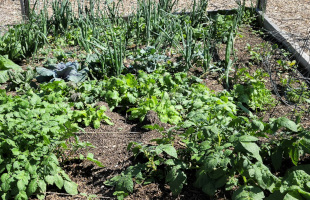
Cover crops are crops used to cover the soil in between plantings of the crops you intend to use, such as vegetables. Why, you may ask, is it important to cover the soil between plantings? Two words: Dust Bowl. There are other reasons, too, but that alone should convince you to pay attention to cover crops.

Dust Bowl
When your garden plot is lying there nice and bare of weeds, waiting for the next planting season, the wind comes and steals your topsoil. According to the folks at Backyard Bounty, the wind will come and scour the soil right down to the bedrock if allowed to. One of the lessons from the Dust Bowl was that cover crops are necessary to hold the soil between plantings.
Green Manure
What do you plant? Vetch, buckwheat, clover, and other nitrogen-fixing plants are usually used. This leads to the second function of a cover crop. They add nitrogen to the soil and reduce the need for supplemental fertilizer. In fact, the right cover crop can add so much nitrogen to the soil that corn can be grown without adding fertilizer, according to Farm and Dairy. Since corn sucks nitrogen up, that is saying something.
Using the Green Manure
There are two ways you can further use the nutrients in your cover crops. You can mow them and leave the vegetation where it falls to provide a mulch that retards weed growth. The thick mat will decompose over time or you can plant by exposing a row and leaving the vegetation all around it.
The second way you can use the cover crop is to till it under before planting on that plot. Again, the plant matter decomposes and adds organic matter to the soil. This method also helps aerate the soil and makes it hold water better. This is important as the plant can draw it up as needed.
Texas A&M University Extension has a good article on cover crops in water-limited areas. They point out that cover crops should be controlled or they will take over the place — vetch is bad about this. In addition, how much nitrogen and other nutrients a cover crop puts into the soil depends on soil type and how well that crop grows in your area.
Don’t let your garden recreate the Dust Bowl. Plant an appropriate cover crop between growing seasons. Your soil will thank you.

Want to learn to garden? My first attempt at gardening ended up in failure. The weeds took over and squeezed the vegetables out. I was very frustrated by this waste of good seed, time, and money. So I became a master gardener and spent a lot of time helping other people avoid or overcome problems in their garden.
In order to help others garden successfully, I have written a book, Vegetable Gardening from the Ground Up, available in an ebook or a paperback from Amazon. It is also in Kindle Unlimited.


Not only that, it works like crop rotation so nutrients and minerals get a chance to replenish. Always good to use a different crop between growing to help the soil. Good post
Cover crops definitely have a place in crop rotation. They make it harder for pests to infest your good crops because cover crops are typically pest resistant or have different pests.
The second way you can use the cover crop is to till it under before planting on that plot. Again, the plant matter decomposes and adds organic matter to the soil.
Cover crops are frequently tilled under to form green manure.