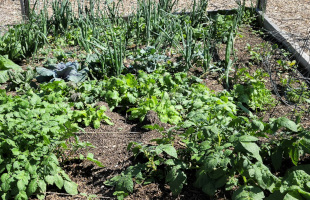

Food safety is in the news more and more these days. Eggs are being recalled, lettuce killed some people, and hamburger is frequently recalled for contamination with E. coli. It is easy to watch the news and smirk as we eat our homegrown produce. Smirk not, however, for improper handling of your produce can result in food-borne illnesses and even death.
Improperly Composted Manure Is Dangerous
One of the major contributors of food-borne pathogens is improperly composted manure. Animal manure has E. coli in it and if you put the manure on your plants without composting it first, you can get that bacteria on your vegetables and bring it into your house. According to the University of California, it is best not to use compost on vegetables. If you do, make sure the compost is completely composted, with no recognizable manure in it.
Finished Compost
Finished compost should be a rich black and smell like clean dirt if it is done. Commercial compost is safer for vegetables as it is made in hotter piles, but no compost is one hundred percent guaranteed safe. However, compost is still recommended if you till it into the soil well instead of leaving it on the surface. A layer of mulch further shields the plants and growing vegetables from possible contamination.
Keep Animals Away
Make sure you do not allow animals near your compost pile or garden. I know some people let chickens or ducks into the garden to eat the bugs there. Unfortunately, poultry are rarely house trained and leave little piles of microbe-filled manure behind them. These can spread salmonella and other diseases. The same is true of the compost pile. If you use well-composted manure but a chicken or goat has left some fresh manure on it, you can introduce disease into your garden.
Contaminated Water
The second thing to think about is your water source. Most of us turn on the tap without thinking about this. If you have a well, it should be tested every six months for E. coli and other nasties. If you irrigate from a pond or other surface water, you should test it as well. Finally, if you irrigate from the tap, use a backflow preventer to prevent water from going back up the hose and contaminating things later. This is especially important if you are using a hose-mounted sprayer to spray pesticides or herbicides.
Clean Hands and Tools
Make sure your hands and tools are clean before harvesting your vegetables. If you have been working in your compost pile, feeding your animals, or just doing all the chores around the farm, you pick up microbes. If you then handle your vegetables, you transfer those microbes to the vegetables. Always wash your hands before picking your food. If you use tools to harvest your vegetables, wash them in a dilute solution of bleach (1 teaspoon in 4 cups of water) or pure white vinegar before using them. Place the vegetables in a clean container and take them straight to the house.
After the Harvest
Once in the house, use tap water to wash fruits and vegetables and process them. Dilute bleach is safe to sanitize your inside work areas. Make sure that bruised or damaged produce is cut to remove the bad parts and used immediately. Other produce should be refrigerated or otherwise stored as recommended.
Stay Safe
These steps will help reduce the possibility that you will become a food-borne illness statistic. We know homegrown food tastes better and that the sooner we eat it, the fewer vitamins are lost. Now you know how to make sure you do not get a serving of harmful microbes with your fruits and veggies.

Want to learn to garden? My first attempt at gardening ended up in failure. The weeds took over and squeezed the vegetables out. I was very frustrated by this waste of good seed, time, and money. So I became a master gardener and spent a lot of time helping other people avoid or overcome problems in their garden.
In order to help others garden successfully, I have written a book, Vegetable Gardening from the Ground Up, available in an ebook or a paperback from Amazon. It is also in Kindle Unlimited.


Stephanie,
Thanks for sharing this.
I would like to add on that planting your own organic items at your own yard is the safer ways to do so..even for organic items available at grocery stores today are not the safer choice anymore..we really need to watch what we eat..
Jay
Thanks. I am always looking for ways to better grow or better prepare the food from my garden. Eating healthier has really helped me keep my waistline in check.