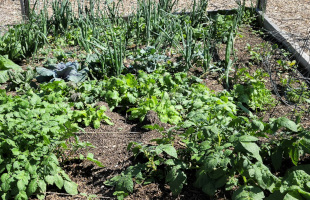

Almost everyone uses herbs in cooking. Fresh herbs can be hard to find, so most people use dried herbs. Although more grocery stores are carrying what they call fresh herbs, the wilted stuff in the box doesn’t really compare to herbs that have just been cut from a garden. In addition, fresh herbs add the most flavor to a recipe and have the most nutrients. The most common kitchen herbs can be grown in a window box or planter. You can’t get much fresher than reaching over and snipping some off while cooking.
Inside or out?
The first decision you need to make is whether you are going to grow the herbs inside or outside. While many herbs grow well inside, many do not. The following herbs are best adapted to growing indoors. Others will grow, but these are the happiest.
- basil
- chives
- mint
- parsley
- rosemary
- sweet marjoram
Houseplant Care
These herbs are planted and grown much like any house plant. If you provide adequate water, fertilizer, and sun, they will do just fine. You harvest up to a third of the herb at a time for use than let it recover before the next harvest. Frequent smaller clippings will concentrate the essential oils in the herbs and make it put out new growth.

Outside herbs
If you have a plot outside, you can grow a wider variety of herbs. A six by ten-foot square provides enough herbs for most families. Basically, you treat this as if it were a vegetable or flower bed and plant the things you want to eat in rows or clumps.
Starting Seeds or Transplants
Some herbs are started from seeds, such as basil. Others are best planted from plants you purchase at the nursery, such as lavender. Make sure you provide adequate water, fertilizer, and sun and the herbs should do well. Caution: Mint spreads until it takes over the world. Grow it in a big pot outside or it will overwhelm everything else.
Harvesting
As I mentioned, some herbs are harvested throughout the growing season for cooking. At the end of the growing season, however, annuals will die. It is best to harvest them when they are at their peak and dry them for use over the winter.
Drying Herbs
The easiest way to dry them is to spread them on a screen and cover them with cheesecloth or other loosely woven cloth to allow air to flow, but keep dust and bugs off of them. When the herbs are completely dry, store them in airtight containers such as fruit jars. Keep in a cool, dark place.

Want to learn to garden? My first attempt at gardening ended up in failure. The weeds took over and squeezed the vegetables out. I was very frustrated by this waste of good seed, time, and money. So I became a master gardener and spent a lot of time helping other people avoid or overcome problems in their garden.
In order to help others garden successfully, I have written a book, Vegetable Gardening from the Ground Up, available in an ebook or a paperback from Amazon. It is also in Kindle Unlimited.


Living in Las Vegas the only way to be able to get fresh herbs (other than going to Whole Foods) is by growing them inside. A friend of mine actually made his own LED grow light for his little herb garden. He has it under his kitchen sink, mostly basil and a rosemary plant. They seem to do fairly well and taste great.
In the UK my mother has a fresh herb garden that is her pride and joy. The mint she grows is out of this world and served with lamb, makes a perfect Sunday Roast!
We started our container herb planting this summer, and are exciting to see how it turned out. We didn’t get that much sunlight in a year, so we’re also thinking to build a indoor small green house before Fall is approaching
The sunlight is an average of six hours a day, not by the year. However, one great thing about containers is being able to move them into the house, garage, or where ever and put a grow light over them over the winter to keep them going while it is cold and dark out. You just have to gradually reintroduce them to the great outdoors in the spring so they don’t get shocked by the change in conditions.